What I Took Away From ANA: AI Is Changing Marketing — But Maybe Not in the Way We Think
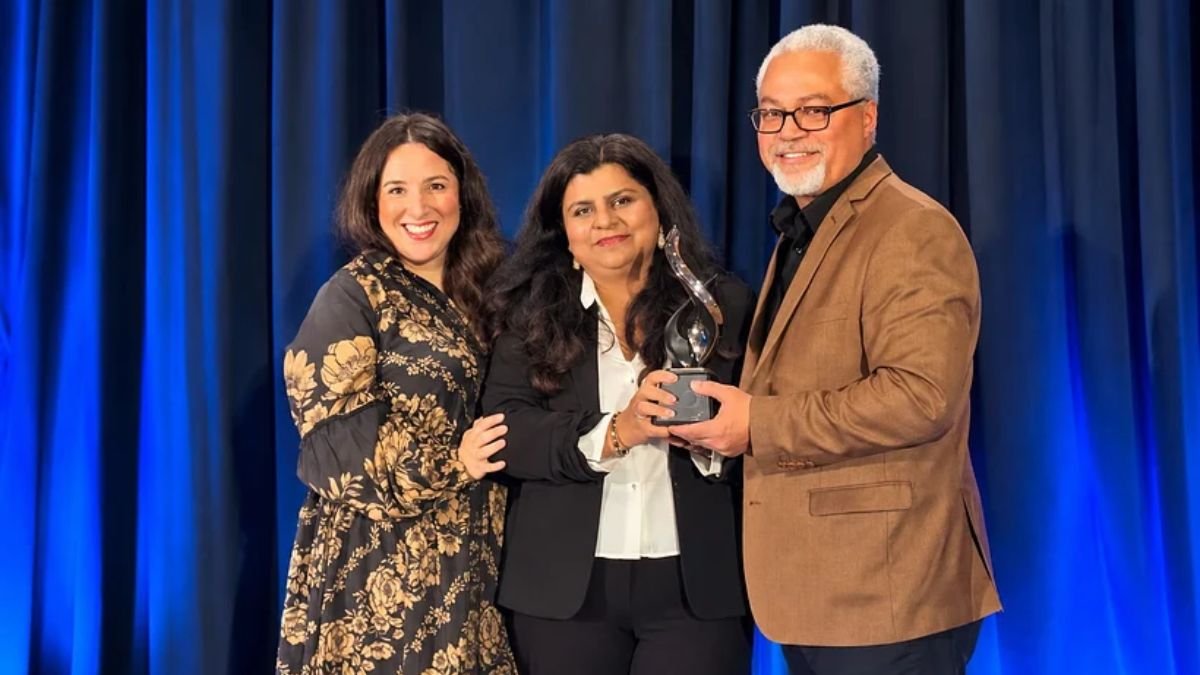
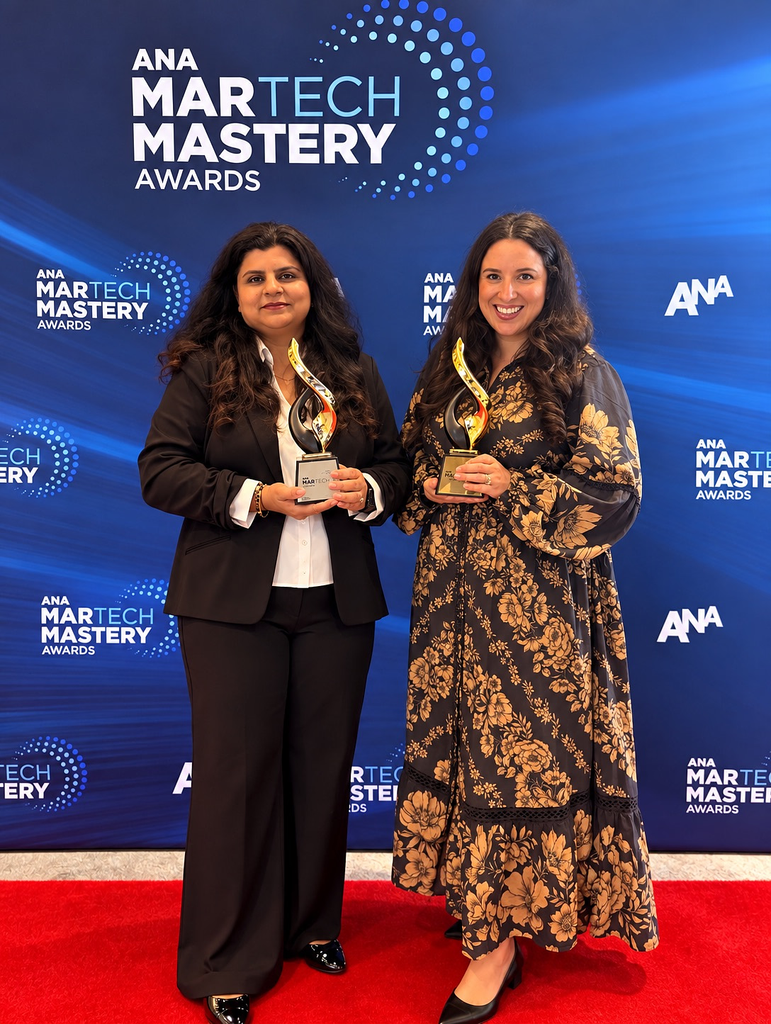
The conference was also personally memorable because our work at Kimberly-Clark was recognized with two ANA awards.
We received recognition for:
Optimization Excellence
Building the Future of CRM: A Scalable, Agile, Product-Centric Operating Model
and
AI Innovation & Impact
Building AI Visibility at Scale: Kimberly-Clark’s Enterprise AEO Transformation
The AEO recognition was especially meaningful given how much of the conference conversation centered around AI-driven discovery.
For me, it reinforced an important point: AEO and GEO are no longer just emerging concepts being discussed by a small group of search specialists.
They are becoming part of a much broader marketing conversation around discoverability, content, technology, governance and customer experience.
The recognition was a proud moment, but more importantly, it reflected the work of many teams and partners who helped turn these ideas into scalable enterprise capabilities.
It was also a fitting moment during a conference where so many of the conversations were focused on exactly where marketing is headed next.
I recently attended the ANA conference, and if I had to summarize the experience in one word, it would probably be AI.
AI was everywhere.
In the presentations.
In the hallway conversations.
In discussions about marketing technology.
In conversations around content, search, data, customer experience and productivity.
And, of course, in conversations about AEO, GEO and how brands will be discovered in a world where customers increasingly ask AI for answers instead of simply searching Google.
Having spent a significant part of my career working on digital experiences and search—and now spending a lot of time thinking about AI-driven discovery—I found many of these conversations particularly interesting.
But surprisingly, my biggest takeaway from the conference wasn’t about a tool, a platform or even a new AI capability.
It was about people.
Marketing is entering a very different discovery era
For years, marketers understood the basic digital journey.
Someone had a question.
They searched.
Google showed them a list of results.
They clicked.
They visited a website.
Brands spent years learning how to optimize every part of that journey.
SEO. Content. Paid search. Conversion optimization. User experience.
But that journey is starting to change.
Today, people can ask ChatGPT, Gemini, Perplexity or another AI platform a question and receive an answer immediately.
Sometimes there is a click.
Sometimes there isn’t.
That creates a very different challenge for brands.
The question is no longer simply:
“How do I rank on Google?”
It is increasingly becoming:
“How does my brand become part of the answer?”
That is why the conversations around AEO and GEO were particularly relevant to me.
Search isn’t disappearing.
But discovery is expanding.
Brands now have to think about how their information is understood, trusted, referenced and surfaced across search engines, AI platforms and whatever discovery interfaces emerge next.
And I believe marketers will spend a lot more time thinking about this over the next few years.
There was a lot of AI. But the conversation is maturing.
What I found encouraging was that many conversations were moving beyond:
“Look what AI can do.”
The questions are becoming more practical.
How do we actually use it?
Where does it create value?
Where should humans remain involved?
How do organizations operationalize it?
How do we measure whether it is working?
And perhaps most importantly:
What capabilities do people need in this new environment?
That last question stayed with me.
One conversation about jobs stood out
Among all the sessions and speakers I listened to, one discussion particularly caught my attention.
It was about what the future job market might look like for people entering the workforce.
There is understandably a lot of anxiety around AI and employment.
Will AI eliminate jobs?
Will companies need fewer people?
What happens to someone starting their career today?
The perspective shared during the discussion was interesting.
Jobs will still exist.
But the nature of those jobs will change significantly.
Organizations will increasingly have less need for people whose primary role is simply to take an order and execute it.
“Create this report.”
“Build this presentation.”
“Write this content.”
“Pull this data.”
“Make this campaign.”
AI can increasingly assist with—or completely execute—many of those tasks.
The opportunity will increasingly belong to people who can understand the problem behind the request.
People who can ask:
Why are we doing this?
What are we actually trying to achieve?
Is this even the right solution?
How can technology help us achieve the outcome faster or better?
That requires a very different mindset.
The future may belong to problem solvers, not order takers
This was probably my strongest takeaway from the conference.
For someone starting a career today, learning how to complete a task may no longer be enough.
You need to understand the business outcome.
You need curiosity.
You need judgment.
You need the ability to connect different pieces of information.
And increasingly, you need to know how to use AI as part of your toolkit.
The valuable employee of the future may not be the person who can produce something the fastest.
AI will probably win that competition.
The valuable employee will be the person who understands what should be produced, why it matters and what should happen next.
There is a big difference.
The same applies to marketers
I think there is a similar lesson for marketing teams.
Simply producing more content because AI makes content production cheaper isn’t necessarily a strategy.
Generating hundreds of articles isn’t a strategy.
Adding an AI chatbot isn’t a strategy.
Buying another AI platform isn’t a strategy.
The real competitive advantage comes from understanding the customer, the problem and the desired business outcome—and then figuring out where AI can genuinely improve the way we get there.
That distinction is going to become increasingly important.
AI makes execution easier. That makes thinking more valuable.
This might sound counterintuitive.
As technology becomes more capable, human judgment may actually become more important, not less.
Because when almost everyone has access to similar AI tools, access to technology itself stops being the differentiator.
The questions become:
Who asks better questions?
Who understands the customer better?
Who can separate useful information from noise?
Who can connect technology with business outcomes?
Who can recognize when the AI-generated answer is wrong?
Who can turn an idea into measurable impact?
Those are much harder capabilities to automate.
My biggest takeaway from ANA
I went to the conference expecting to hear a lot about AI.
And I certainly did.
I heard fascinating conversations around AI, marketing technology, AEO, GEO, search and how customer discovery is evolving.
But I came away thinking much more about something else:
The next generation of successful marketers will not simply be people who know how to use AI.
Everyone will eventually know how to use AI.
The differentiator will be people who know what to do with it.
People who understand the business.
People who understand customers.
People who challenge the request instead of simply accepting it.
People who can move from:
“Tell me what you want me to do.”
to:
“Tell me what you’re trying to achieve.”
That is a very different professional mindset.
And after listening to many conversations and speakers at ANA, I think that shift may ultimately be much more important than any individual AI tool we discussed.
Because tools will keep changing.
The ability to understand a problem, adapt to a new world and deliver an outcome will remain valuable.